

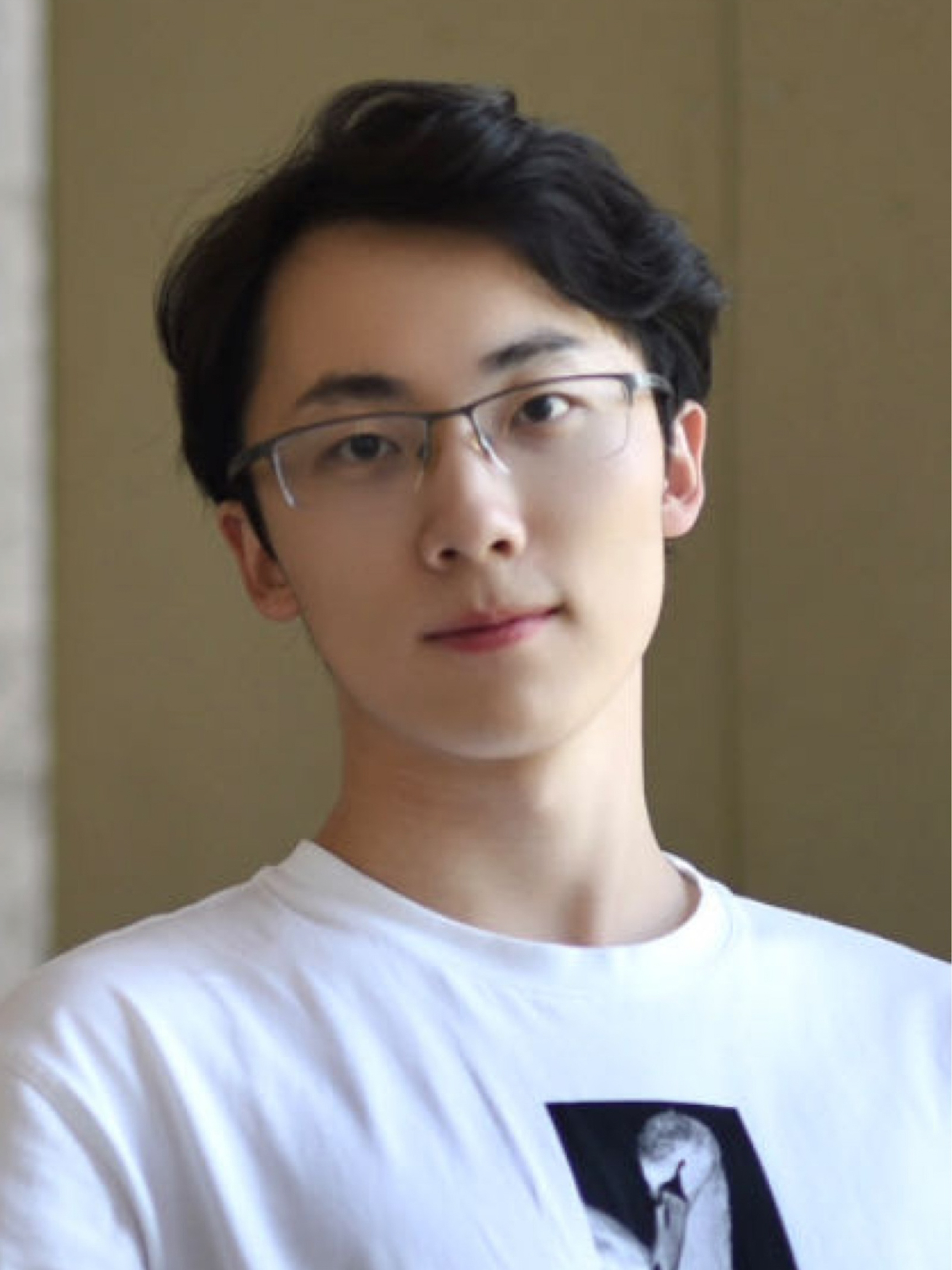
Dr. Yushun Dong’s research team has had six papers accepted at top-tier international conferences
Department of Computer Science
Dr. Yushun Dong’s research team has had six papers accepted at top-tier international conferences spanning data mining, machine learning, artificial intelligence, and healthcare informatics, including KDD 2026 (×2), ICML 2026, IJCAI 2026, AAAI 2026, and ICHI 2026. These contributions advance the frontiers of trustworthy AI, graph learning, large language model security, and biomedical signal analysis.
AGDN — Learning to Solve the Traveling Salesman Problem with Anisotropic Graph Diffusion Networks
In collaboration with Singapore Management University, this work introduces a graph diffusion framework that overcomes long-standing limitations of sparsification and shallow message passing in neural TSP solvers. AGDN achieves state-of-the-art performance across problem sizes and real-world benchmarks, pushing the frontier of neural combinatorial optimization for applications such as logistics, circuit design, and vehicle routing.
Certified Defense on the Fairness of Graph Neural Networks
This paper introduces the first certified defense framework that provides provable fairness guarantees for GNNs under adversarial perturbations of both node attributes and graph structure. As a plug-and-play framework requiring no retraining, it lays a mathematical foundation for adversarially robust fair graph learning in high-stakes domains such as finance, hiring, and criminal justice.
CREDIT — Certified Ownership Verification of Deep Neural Networks Against Model Extraction Attacks
In collaboration with Duke University and the University of Central Florida, this work proposes the first certified ownership verification framework against model extraction attacks, with rigorous probabilistic guarantees on both false positives and false negatives. The framework offers a principled foundation for protecting intellectual property in Machine Learning as a Service (MLaaS) platforms, where stolen models can cause substantial commercial and security losses.
LLM as Clinical Graph Structure Refiner — Enhancing Representation Learning in EEG Seizure Diagnosis
In collaboration with Osaka University, this research is among the first to leverage large language models as context-aware refiners of clinical graphs, removing noisy or spurious connections in EEG-based seizure diagnosis. The work opens a new direction at the intersection of LLM reasoning and clinical graph learning, with broad implications for interpretable AI-assisted diagnosis.
Query-Efficient Domain Knowledge Stealing Against Large Language Models
Jointly conducted with UCLA, UIUC, and Louisiana State University, this work uncovers a new class of attacks that extract specialized domain knowledge from black-box LLMs without any prior domain supervision and with significantly fewer queries than prior methods. Demonstrated in medicine and finance, the findings raise urgent concerns about intellectual property protection for domain-specialized LLMs and motivate stronger API-level defenses.
Optimizing EEG Graph Structure for Seizure Detection via Information Bottleneck and Self-Supervised Learning
In collaboration with Osaka University, this paper introduces IRENE, a self-supervised framework that jointly learns denoised brain connectivity graphs and discriminative EEG representations under an information bottleneck principle. IRENE delivers state-of-the-art accuracy and clinical interpretability on the TUSZ benchmark, advancing trustworthy AI for real-world neurological diagnosis.