

Fully Random Access: Can We Eliminate Access Coordination in Wireless Networks?
Zhenghao Zhang · Department of Computer Science Seminar
| Speaker | Zhenghao Zhang |
| Date | September 11, 2:15 – 3:05 pm |
| Location | 307 Love (In Person Only) |
Abstract
Low Earth Orbit (LEO) satellite networks have emerged as an attractive option to complement the existing wireless infrastructure. One of the main challenges in LEO networks is to achieve low latency for applications such as automatic driving and gaming. A promising direction to reduce the latency is to employ Uncoordinated Access Channels (UCACH) which avoid the overhead of resource allocation prior to data transmissions. In this paper, a novel modulation scheme, referred to as QCode, is proposed to support communications from user terminals to satellites in UCACHs. The key novelty of QCode is to use long symbols while aggressively increasing the number of bits modulated on each symbol. As a result, QCode achieves high network capacity without sacrificing data rates for individual user terminals. Experiments in the POWDER platform confirm that QCode packets can be received correctly in real-world wireless channels without prior synchronization. Simulations with satellite channel models show that QCode achieves significantly higher network throughput than the existing option.
About the speaker
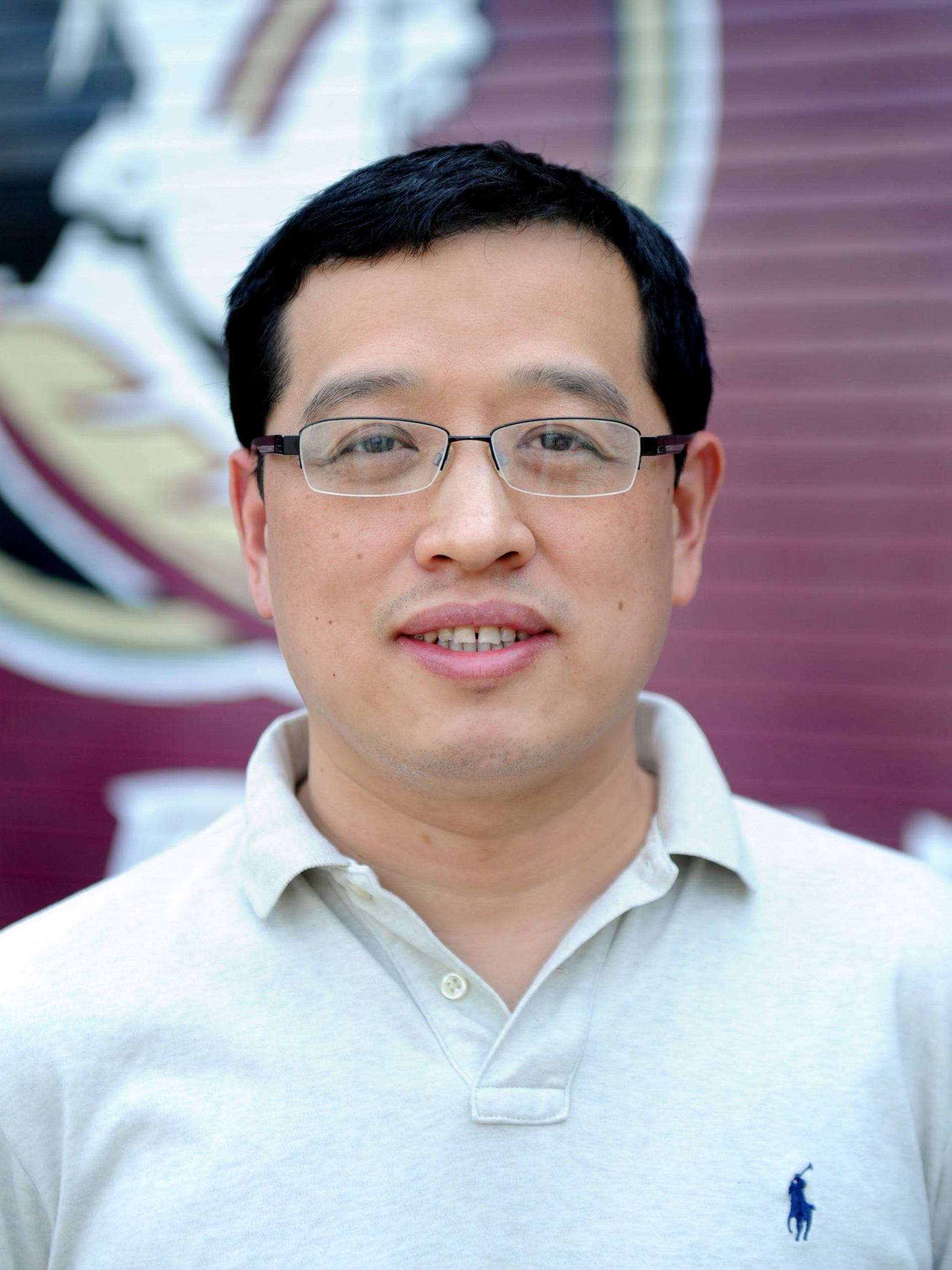
Zhenghao Zhang received his B.Eng. and M.S. degrees in Electrical Engineering from Zhejiang University, Hangzhou, China, in 1996 and 1999, respectively, and his Ph.D. in Electrical Engineering from the State University of New York at Stony Brook in 2006. From 1999 to 2001, he worked in industry as an embedded systems software engineer. He was a Postdoctoral Researcher in the Computer Science Department at Carnegie Mellon University from 2006 to 2007. He joined the Department of Computer Science at Florida State University in Fall 2007, where he is currently a Full Professor. His primary research interest is wireless networks. He has published papers in highly reputable venues, such as ACM Sensys, IEEE Infocom, ACM CoNEXT, ACM Mobihoc, ACM Mobisys, IEEE ICNP, IEEE/ACM Transactions on Networking, and IEEE Transactions on Wireless Communications. His research group is familiar with SDR and has extensive experience with the POWDER platform. He has shared with the community both code and data sets in multiple projects, including a software LoRa receiver, a software LR-FHSS receiver, and software to analyze Starlink satellite beacons.